
You’ve hit ChatGPT’s “message too long” limit-or wondered why AI companies bill by tokens instead of words. That’s because AI doesn’t read text the way we do. It breaks everything into pieces called tokens-the hidden meter behind every AI interaction.
🎯 The Simple Definition
A token is a chunk of text that AI models use as their basic unit of processing. Rather than reading letter by letter or word by word, AI breaks text into tokens-pieces that might be whole words, parts of words, or punctuation marks. Think of tokens as AI’s alphabet, but more flexible than our 26 letters. Everything the AI reads and writes gets converted to tokens first.
⚙️ How It Works
Imagine trying to build sentences using Scrabble tiles, but instead of individual letters, you have tiles with common letter combinations: “ing,” “tion,” “the,” “pre.” You could spell words faster by combining these chunks rather than placing one letter at a time.
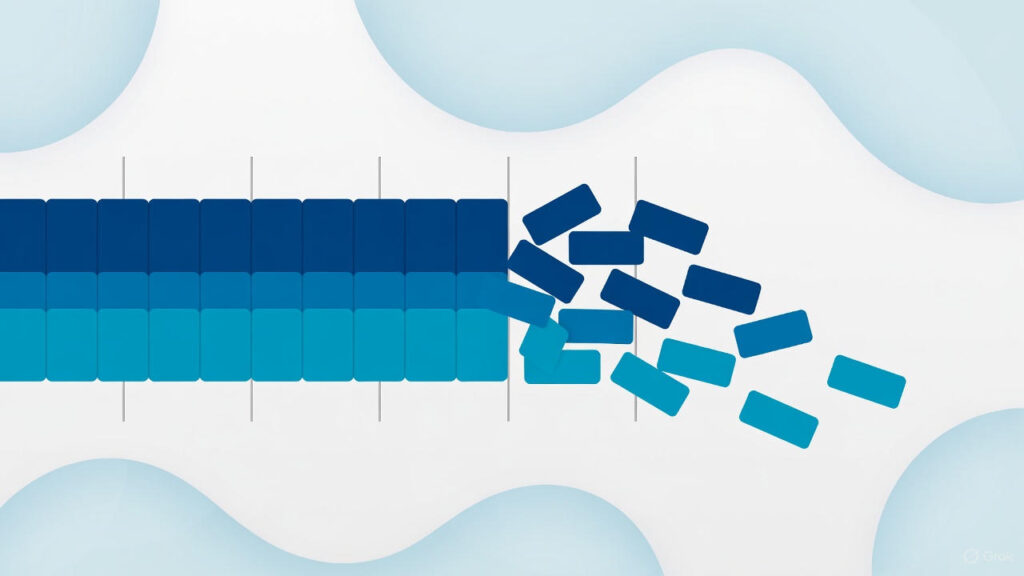
Tokens work similarly. The word “unbelievable” might become three tokens: “un” + “believ” + “able.” Common words like “the” or “and” are usually single tokens. Rare or complex words get split into multiple pieces.
Why not just use whole words? Because AI needs to handle every possible word, including new ones, misspellings, and technical terms. By using subword tokens, the model can construct any word from a manageable set of building blocks-typically 50,000 to 100,000 different tokens.
Here’s a useful rule of thumb: most English text uses roughly 1.3 tokens per word. A 500-word article becomes about 650 tokens. This matters because AI can only handle so many tokens at once.
🌍 Real-World Example
When you type a question to ChatGPT, your text gets converted to tokens before processing. A simple sentence like “What is the weather today?” becomes approximately 6-7 tokens. The AI processes these tokens, generates response tokens, and converts them back to readable text.
Token counts don’t equal word counts. “ChatGPT” is just 1 token, while “antidisestablishmentarianism” might be 5 tokens. Even emojis count-“Hello 👋” costs extra because that wave emoji alone is 2+ tokens.
Pricing works the same way. AI providers charge per token-both what you send and what you receive. A complex technical document costs more to analyze than a simple email, even if they have similar word counts.
💡 Why It Matters
Tokens are the currency of AI. Understanding them helps you write more efficient prompts, avoid hitting limits, estimate costs, and troubleshoot why AI sometimes “forgets” the start of long conversations.
Token limits affect what AI can do. A model with a 4,000-token limit can only “see” about 3,000 words at once-including both your question and its answer. When conversations exceed this limit, earlier parts get cut off.
Here’s a practical tip: shorter, clearer prompts use fewer tokens and often get better results. You don’t need to count tokens manually, but knowing they exist makes AI feel less mysterious.
✅ Key Takeaway
Tokens are the bite-sized text chunks AI actually processes-usually parts of words that together form the building blocks of everything the AI reads, writes, and bills you for.
[ainuggets_video url=’https://youtu.be/4mmhPwlxdnc’ title=’What are Tokens in AI? A Simple Explanation | AI Nuggets’]
📚 Continue Learning
- What is a Context Window? – How many tokens AI can handle at once
- What is Tokenization? – The process of creating tokens
- What is a Large Language Model? – The system that uses tokens