
[hero]
What This Article Covers
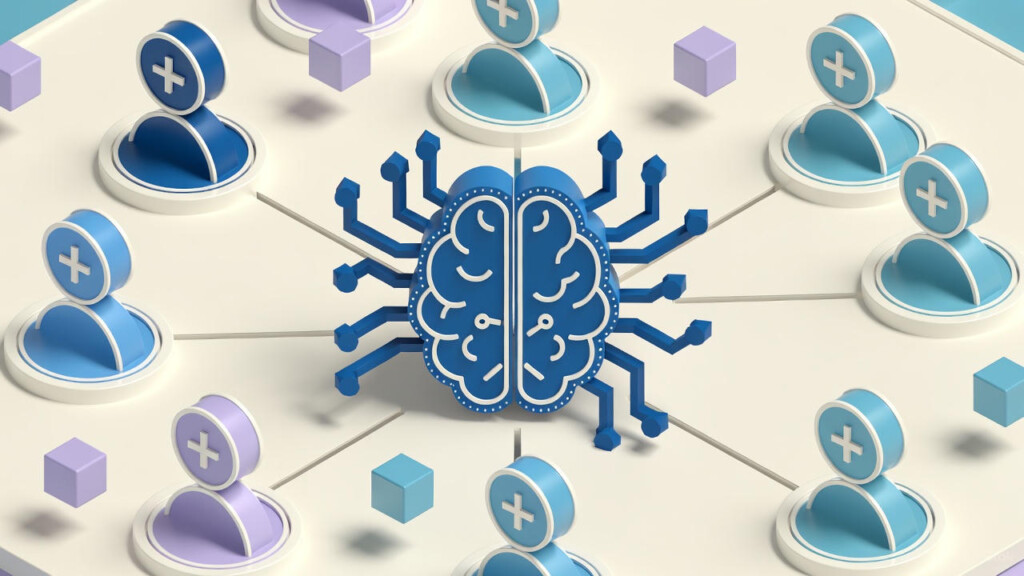
Human oversight isn’t about limiting AI—it’s about keeping humans in control of decisions that matter while still leveraging AI efficiency. With the EU AI Act requiring human oversight for high-risk systems, implementation is no longer optional for many organizations.
In this article, you’ll learn four oversight models, how to select the right level based on risk, and how to design oversight that’s meaningful rather than checkbox compliance.
This guide is for CISOs, AI product managers, compliance officers, and operations leaders responsible for AI governance.
By the end, you’ll have a practical framework for implementing human oversight that satisfies regulatory requirements while maintaining operational efficiency.
[/hero]
🎯 The Core Idea
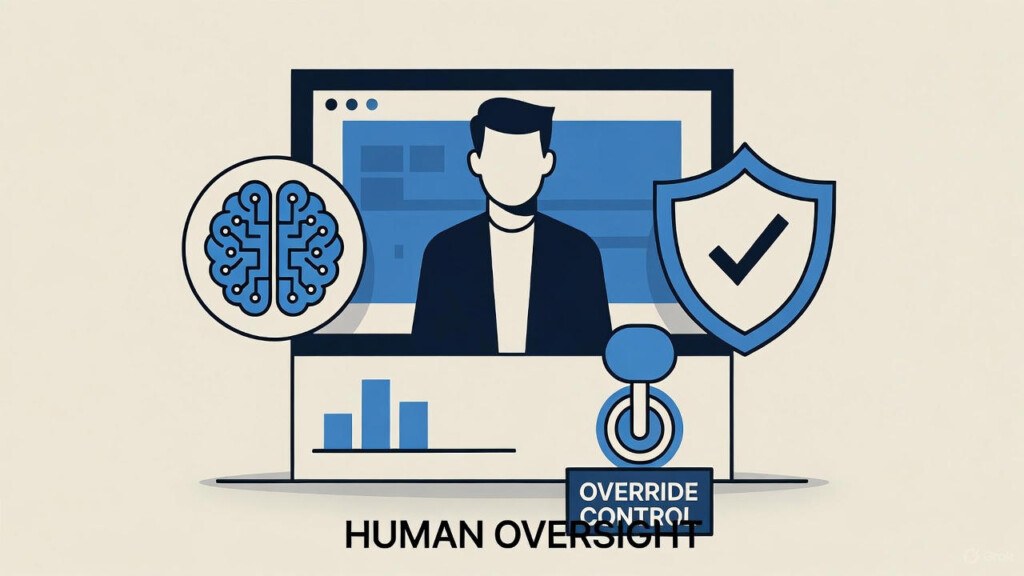
Human oversight means ensuring humans remain in control of AI decisions that matter—like a pilot who can override autopilot.
The autopilot handles routine flying, but a human makes critical decisions and can take control anytime. This is the balance we need with AI systems.
The challenge is making oversight meaningful. Having a human “approve” 1,000 AI decisions per hour isn’t real oversight—it’s rubber-stamping. Real oversight means humans have the time, information, and authority to actually evaluate and override AI when needed.
[tip]
Real oversight = humans who can actually evaluate and override AI. Anything less is checkbox compliance, not genuine control.
[/tip]
📖 Four Human Oversight Models
Different situations require different levels of human involvement. Understanding these models helps match oversight to risk.
Human-in-the-Loop (HITL)
In this model, humans approve every AI decision before action is taken. The AI recommends; the human decides.
Maximum control, lowest automation. Every decision gets human evaluation. This is appropriate for high-stakes, irreversible decisions where errors cause significant harm.
Example applications: Final approval on loan decisions, medical diagnosis confirmation, termination recommendations in HR systems. In these cases, the cost of human review is justified by the consequences of errors.
Limitation: Creates bottlenecks. If decision volume exceeds human capacity, either quality suffers or decisions back up.
Human-on-the-Loop (HOTL)
Here, AI acts autonomously while humans monitor and can intervene when needed. The AI operates; humans supervise.
Balanced control and efficiency. AI handles routine decisions at speed while humans review exceptions, spot-check samples, and intervene when patterns concern them.
Example applications: Content moderation with human review queues, fraud detection with analyst escalation, customer service with supervisor override capability. Time-sensitive decisions that benefit from automation but still need human judgment for edge cases.
Limitation: Requires effective monitoring systems and clear escalation triggers. Humans must actually review, not just assume AI is correct.
Human-in-Command (HIC)
Humans set parameters and boundaries; AI operates freely within them. Humans define the rules; AI executes.
Highest automation with strategic oversight. AI handles high-volume, lower-risk decisions while humans control the framework governing those decisions.
Example applications: Dynamic pricing within approved ranges, automated email responses from approved templates, scheduling systems following human-defined policies. Decisions where the parameters matter more than individual choices.
Limitation: Parameters must be carefully designed. AI will optimize within boundaries, potentially in unexpected ways if boundaries aren’t comprehensive.
Human-as-Validator
Humans sample and audit AI outputs after deployment rather than approving individual decisions. This model focuses on quality assurance and drift detection.
Post-deployment verification. A QA team reviews 10% of AI customer service responses, auditors sample automated decisions monthly, or compliance officers review flagged outputs periodically.
Example applications: Quality sampling of AI-generated content, periodic audits of automated underwriting decisions, compliance spot-checks on AI recommendations.
Limitation: Issues may not be caught until after harm occurs. Works best combined with other models for comprehensive coverage.
[takeaway]
Match oversight level to decision risk—not all AI needs the same control. High-stakes decisions need human-in-the-loop; routine decisions can use lighter oversight.
[/takeaway]
🎯 Selecting the Right Oversight Level
Choosing the appropriate model requires systematic risk assessment.
Reversibility is the first factor. Can mistakes be undone? An AI that recommends products can be corrected by returns; an AI that denies medical treatment may cause irreversible harm. Less reversible decisions need tighter oversight.
Impact magnitude matters. Low-impact decisions (email sorting) tolerate errors better than high-impact decisions (loan approvals). Higher impact warrants more human involvement.
Time sensitivity creates constraints. Some decisions must happen in milliseconds (fraud detection during transactions); others allow deliberation (employment decisions). Time-critical decisions may need human-on-the-loop rather than human-in-the-loop.
Regulatory requirements may mandate specific oversight levels. EU AI Act high-risk categories require human oversight capabilities regardless of your own risk assessment.
[mistake]
Applying the same oversight to all AI = either too much friction for low-risk decisions or too little control for high-risk ones. Risk-based differentiation is essential.
[/mistake]
🔍 Designing Meaningful Oversight
The difference between real oversight and compliance theater lies in implementation details.
Avoiding Rubber-Stamping
Volume limits matter. How many decisions can one human meaningfully review? If an analyst “reviews” 500 AI decisions daily, are they evaluating or clicking approve? Set realistic volumes based on decision complexity. A practical guideline: one overseer per 50 complex decisions, with rotation to combat fatigue.
Information presentation determines capability. Does the human have what they need to actually evaluate the AI decision? Simply showing “AI recommends: Approve” isn’t enough. Humans need the factors behind recommendations, confidence levels, and relevant context.
Time allocation must be real. If the process assumes 30 seconds per review, is that sufficient for genuine evaluation? Build schedules that allow actual thinking, not just processing.
Accountability creates incentive. When humans are genuinely responsible for decisions they approve—not just following AI recommendations—oversight quality improves. Make override authority meaningful.
Risk-Based Escalation Triggers
Effective escalation should be automatic and objective, not left to human discretion.
Confidence-based triggers: AI automatically escalates when prediction confidence drops below 85%, when top-2 class probabilities are within 10%, or when high entropy appears in LLM responses.
Context-based triggers: Escalate decisions involving protected attributes, vulnerable groups (minors, elderly, high-risk patients), or edge-case inputs the model hasn’t seen before.
Behavioral triggers: User explicitly requests human review, repeat queries signal frustration, or contradictory inputs suggest confusion.
System triggers: Model version mismatch, detected input drift, or anomalies in processing latency.
Override Capability
Technical ability to override must exist. If the system architecture doesn’t allow human decisions to supersede AI, oversight is theater. Build override capability into system design.
Authority to decide differently must be clear. Humans must know they can disagree with AI without penalty or excessive justification burden.
Monitor override rates as a key operational metric. A zero percent override rate can signal excessive automation bias—humans rubber-stamping without genuine review. A very high override rate might indicate poor model performance or confusing explainability output.
[important]
Meaningful oversight requires humans with information, time, authority, and accountability. Missing any element makes oversight performative rather than functional.
[/important]
🛡️ Implementation Framework
Translating oversight principles into practice requires structured implementation.
Step 1: Classify AI Decisions by Risk
Map every AI decision point in your systems. For each, assess impact (what happens if wrong?), reversibility (can we fix mistakes?), and volume (how many decisions daily?). Assign each to an oversight level: HITL, HOTL, HIC, or Validator.
Step 2: Design Review Processes
For each oversight level, define the workflow. What triggers human review? What information is presented? Who reviews? What are response time expectations? How are decisions documented?
Create escalation paths for each trigger type. Ensure human reviewers are identified and resourced.
Step 3: Build Technical Capability
Implement dashboards showing AI decisions, confidence levels, and patterns. Build override mechanisms that humans can actually use. Ensure comprehensive audit logging of both AI decisions and human interventions.
The technical infrastructure must support—not hinder—human oversight.
Step 4: Train Human Overseers
Training must cover AI capabilities and limitations (what AI can and can’t do well), how to interpret AI outputs and confidence scores, when and how to override, and avoiding automation bias.
Humans can’t provide effective oversight of systems they don’t understand.
Step 5: Monitor and Adjust
Track override rates—both too few (possible rubber-stamping) and too many (possible AI quality issues) signal problems. Conduct “near-miss” reviews of cases AI got almost wrong. Red-team your oversight process: can attackers evade human review? Iterate based on outcomes and feedback.
🚫 Common Oversight Failure Modes
Understanding how oversight fails helps prevent these patterns in your organization.
Rubber-stamping: Humans approve AI outputs without critically reviewing them, often due to time pressure or overtrust in AI accuracy.
Alert fatigue: Too many escalations cause overseers to ignore important signals or auto-approve to clear queues.
Overly complex interfaces: Poor UI design hides critical information from human reviewers, making meaningful evaluation impossible.
Blind trust in AI: Operators assume the model is “smart” or “correct,” defaulting to AI recommendations even when their judgment differs.
Lack of authority: Oversight personnel cannot actually override or stop systems, making their role performative.
Insufficient logging: Without comprehensive audit trails, oversight becomes impossible to verify and improve.
📜 Regulatory Requirements
Regulatory frameworks increasingly mandate human oversight for AI systems.
EU AI Act Article 14 requires that high-risk AI systems be designed to allow effective human oversight. Specifically, humans must be able to understand the AI system, interpret its outputs correctly, decide not to use it or disregard its output, and interrupt or stop the system.
These requirements become enforceable in 2025 for many AI system categories. Organizations deploying high-risk AI in EU markets must demonstrate oversight capability.
NIST AI RMF addresses human-AI teaming, emphasizing that humans and AI should complement each other’s capabilities, with humans maintaining appropriate control based on context.
ISO 42001 includes human oversight as part of AI management system requirements.
📌 Key Takeaways
The Essential Points:
- Four oversight models exist: human-in-the-loop (approve each), human-on-the-loop (monitor and intervene), human-in-command (set parameters), and human-as-validator (audit samples).
- Match oversight level to decision risk—irreversibility, impact magnitude, and time sensitivity should guide model selection.
- Meaningful oversight ≠ rubber-stamping—humans need manageable volumes, sufficient information, adequate time, and real authority.
- Technical capability must support oversight—dashboards, override mechanisms, and audit logging enable rather than hinder human control.
- EU AI Act Article 14 requires human oversight for high-risk AI systems, with enforcement beginning 2025.
- Train human overseers on AI capabilities, limitations, and when to intervene. Understanding enables effective oversight.
- Monitor and calibrate continuously—track override rates, assess effectiveness, and adjust based on outcomes.
📚 Additional Resources
- EU AI Act Article 14: Human Oversight
- NIST AI RMF: Human-AI Teaming
- ISO 42001: AI Management Systems
[aisecuritydir_video url=”https://youtu.be/0-qi-DJqdtg ” title=”How to Implement Human Oversight for AI Systems “]
[aisecuritydir_quiz id=”36″]
[disclaimer]