[hero]
🎯 The Core Idea
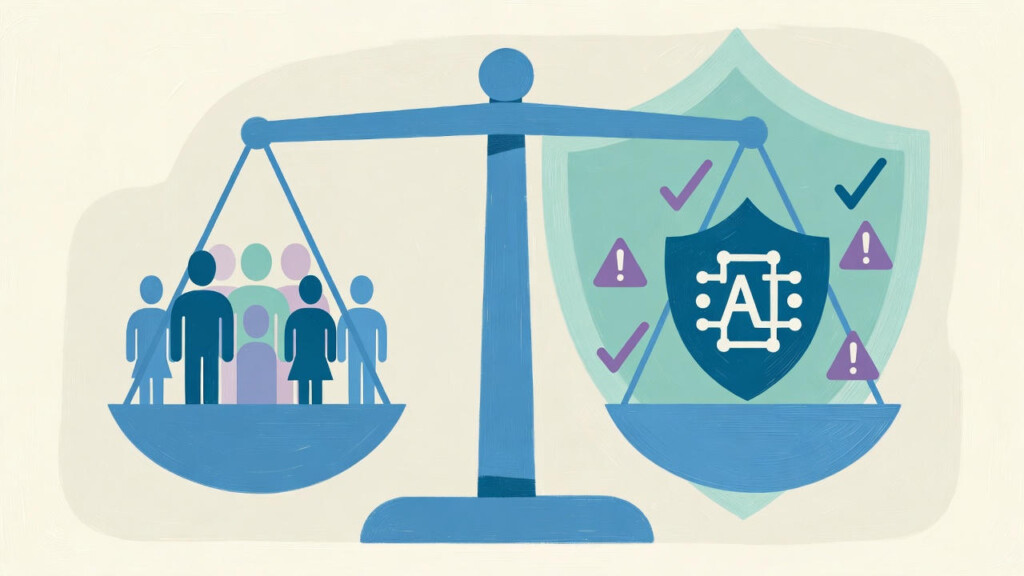
The EU AI Act is the world’s first comprehensive legal framework for artificial intelligence, establishing risk-based rules that determine what AI systems can be used, how they must be built, and who is accountable when things go wrong.
Think of it like: A highway system for AI—the EU AI Act doesn’t ban cars (AI), but it requires guardrails on cliffs (high-risk AI), speed limits in school zones (transparency requirements), and regular vehicle inspections (ongoing monitoring). You can still drive fast—just not recklessly.
What This Article Covers
If your organization develops, deploys, or uses AI systems that touch the European market, you need to understand the EU AI Act—and time is running out.
In this guide, you’ll learn the four-tier risk classification system, specific compliance requirements for each level, the difference between provider and deployer obligations, key enforcement deadlines, and a practical roadmap for achieving compliance.
This guide is written for CISOs, compliance officers, legal teams, AI product owners, and risk managers who need actionable clarity on EU AI Act implementation.
By the end, you’ll have a clear framework for classifying your AI systems, understanding your obligations, and building a compliance timeline that keeps your organization out of regulatory trouble.
[/hero]
💼 Why This Matters Now
The EU AI Act isn’t coming—it’s already here. The regulation entered into force on August 1, 2024, and enforcement has begun.
Prohibited AI practices and AI literacy obligations entered into application from February 2, 2025. The governance rules and obligations for general-purpose AI (GPAI) models became applicable on August 2, 2025.
The business implications are substantial. AI Act violations may be punished with significant penalties, including fines of up to EUR 35 million or 7% of global annual turnover. For context, a company with €500 million in annual revenue could face fines up to €35 million for serious violations.
[important]
This isn’t optional compliance—it’s operational law. Non-compliance exposes not just the organization but potentially leadership to personal liability in some jurisdictions. Unlike voluntary frameworks, the EU AI Act carries binding legal obligations with real enforcement mechanisms.
[/important]
Beyond penalties, non-compliance creates operational risk: AI systems using prohibited practices must be discontinued immediately, and high-risk systems that don’t meet requirements cannot be legally deployed in EU markets.
The regulation’s reach extends beyond EU borders. If your AI system’s outputs are used in the EU—even if you’re headquartered elsewhere—you likely fall under EU AI Act jurisdiction.
🔍 The Four-Tier Risk Classification System
The EU AI Act takes a risk-based approach, categorizing AI systems into four tiers with proportionally different requirements. Classification is based on use case and potential impact—not on model type or technology.

Tier 1: Unacceptable Risk (Prohibited)
These AI systems are banned outright. The AI Act prohibits eight practices:
- Manipulative AI: Systems using subliminal techniques to distort behavior and cause harm
- Exploitative AI: Systems targeting vulnerable groups based on age, disability, or socio-economic status
- Social Scoring: Government-run systems classifying people based on behavior or characteristics
- Predictive Policing: AI predicting criminal behavior based solely on profiling
- Emotion Recognition: Inferring emotions in workplaces or educational settings
- Biometric Categorization: Classifying individuals by protected characteristics like race or religion
- Real-Time Biometric Identification: Live facial recognition in public spaces (with limited law enforcement exceptions)
- Facial Recognition Database Expansion: Scraping images to build or expand facial recognition databases
The prohibitions became effective in February 2025. If your organization operates any of these systems, you are already required to have discontinued them.
Tier 2: High Risk
High-risk AI systems face the most extensive requirements but are permitted when compliant. High-risk classification applies to AI systems in two main categories:
Safety Components: AI used as a safety component in products already regulated under EU law (medical devices, machinery, toys, vehicles, aviation) that require third-party conformity assessment.
Annex III Use Cases: AI systems used in sensitive domains:
- Biometric identification and categorization
- Management of critical infrastructure (energy, transport, water)
- Education and vocational training (admissions, assessment)
- Employment, worker management, and recruitment
- Access to essential private and public services (credit scoring, insurance)
- Law enforcement
- Migration, asylum, and border control
- Administration of justice and democratic processes
[caution]
When in doubt, classify UP. Many “low-impact” tools feed into high-risk decisions. A customer service chatbot that approves refunds may be high-risk (essential service impact). An internal analytics tool feeding into hiring decisions is high-risk (downstream employment impact). It’s easier to de-escalate classification later than face retroactive penalties.
[/caution]
Tier 3: Limited Risk
Limited-risk AI systems mainly require transparency measures. Users must be informed when they’re interacting with AI, and content generated or modified by AI—including images, audio, and video (deepfakes)—must be clearly labeled as AI-generated.
Examples include chatbots, generative AI content tools, and emotion recognition systems outside prohibited contexts.
Tier 4: Minimal Risk
Minimal-risk includes everyday AI applications such as spam filters, recommendation engines, and basic automation tools that pose minimal or no significant risk.
While no mandatory requirements apply, organizations are encouraged to adopt voluntary codes of conduct addressing environmental sustainability, accessibility, and ethical development practices. Importantly, AI literacy requirements still apply to all staff working with AI systems.
[tip]
Classification Edge Cases to Watch:
- HR chatbot that screens resumes → High-risk (employment use)
- Customer service bot that approves refunds → High-risk (essential service impact)
- Internal analytics feeding hiring decisions → High-risk (downstream impact)
- AI-powered spam filter → Minimal risk
The key question: Does this AI influence decisions about people’s access to employment, credit, education, or essential services?
[/tip]
⚙️ Requirements for High-Risk AI Systems
Organizations deploying high-risk AI systems face substantial compliance obligations across the entire AI lifecycle.
Mandatory Requirements
Risk Management System: Establish and maintain a documented risk management process throughout the AI system’s lifecycle. This must include systematic identification and analysis of known and foreseeable risks, adoption of suitable risk management measures, and evaluation of risks that may emerge from AI use.
Data Governance: Training, validation, and testing datasets must be relevant, sufficiently representative, and free of errors to the best extent possible. Data governance must include examination for possible biases and detection/prevention of discriminatory outcomes.
Technical Documentation: Comprehensive documentation enabling conformity assessment, including system architecture, training processes, and performance metrics. This documentation must be retained for at least 10 years after system deployment ends.
[important]
Documentation is your legal shield. If accused of bias or failure, documented diligence significantly reduces liability. This isn’t bureaucracy—it’s your defense. Log everything: inputs, outputs, confidence scores, human interventions. Keep records accessible for regulators on request.
[/important]
Record-Keeping: Systems must automatically record events relevant for identifying risks and substantial modifications throughout the lifecycle. Audit trails support post-market monitoring and regulatory inspection.
Transparency: Provide clear instructions for use to downstream deployers, including capabilities, limitations, and human oversight specifications.
Human Oversight: Design systems to allow deployers to implement meaningful human oversight—not symbolic. Operators must be able to understand the model’s predictions, intervene effectively, and override decisions when necessary. The model must provide sufficient information to inform the human’s decision.
Accuracy, Robustness, and Cybersecurity: Systems must achieve appropriate levels of accuracy, be resilient to errors and adversarial attacks, and maintain cybersecurity measures throughout the lifecycle.
Conformity Assessment & CE Marking
Before placing high-risk systems on the market, providers must complete conformity assessment:
- Self-Assessment: Available for most high-risk systems where internal audit plus declaration of conformity is sufficient
- Third-Party Assessment: Mandatory for certain categories (like biometrics) where a Notified Body must verify compliance
- EU Declaration: Sign and affix CE mark
- Registration: Enter in EU database before market placement
👥 Provider vs. Deployer Responsibilities

The EU AI Act distinguishes between providers (developers) and deployers (users), with different but shared obligations.
[important]
Liability is shared between provider, importer, distributor, and deployer. Even if you use a third-party vendor’s pre-trained model, you remain responsible as deployer for how AI is used in your context. Vendor compliance assurances don’t transfer your obligations.
[/important]
Provider Obligations
Providers must ensure their AI systems meet all applicable requirements before market placement, maintain technical documentation, implement quality management systems, and take corrective action when systems don’t conform.
Deployer Obligations
Companies using AI systems must maintain a complete inventory, ensure prohibited applications are not used, use systems according to instructions, ensure human oversight capability exists, monitor operations for risks, and keep logs when appropriate.
Special Rules for GPAI Models
General-purpose AI models like large language models face specific requirements. Providers must maintain technical documentation covering model development, training, and evaluation. Transparency reports must describe capabilities, limitations, potential risks, and guidance for integrators. Training data summaries must be published including data types, sources, and preprocessing methods.
Extended obligations apply to particularly powerful GPAI models classified as “systemic risk”—typically models requiring compute of more than 10^25 FLOPs (like GPT-4 scale). These models must undergo thorough evaluations, and any serious incidents must be reported to the European Commission.
📅 Compliance Timeline & Milestones

Already in Effect
| Milestone | Date | Status |
|---|---|---|
| AI Act entered into force | August 1, 2024 | ✅ Active |
| Prohibited practices banned | February 2, 2025 | ✅ Active |
| AI literacy requirements | February 2, 2025 | ✅ Active |
| GPAI transparency obligations | August 2, 2025 | ✅ Active |
| AI Office fully operational | August 2, 2025 | ✅ Active |
| Penalty regime active | August 2, 2025 | ✅ Active |
Upcoming Deadlines
| Milestone | Date | Time Remaining |
|---|---|---|
| High-risk system requirements | August 2, 2026 | ~9 months |
| Codes of practice for GPAI | August 2, 2026 | ~9 months |
| Full implementation (all categories) | August 2, 2027 | ~21 months |
💰 Penalties & Enforcement
The penalty structure scales with violation severity:
- Up to €35 million or 7% of global annual turnover for prohibited AI practices
- Up to €15 million or 3% for high-risk system violations
- Up to €7.5 million or 1% for incorrect or misleading information to authorities
[caution]
SME Considerations: The Act provides for proportional application of fines for small and medium enterprises. Warnings may precede fines for minor infringements, and economic impact on smaller businesses is considered. However, SME status doesn’t exempt you from compliance—only from maximum penalty severity.
[/caution]
Additional Liability Considerations
- Product liability rules apply to AI systems causing harm
- Compensation for damages may be required
- Insurance requirements apply to high-risk AI providers in some cases
- Reputational damage and market access loss multiply true non-compliance costs
Enforcement Infrastructure
The AI Office became operational August 2, 2025. Member States designated national competent authorities including market surveillance and notifying authorities. Investigative powers include on-site audits, data/model access requests, and temporary bans.
Incident Reporting: Serious incidents must be reported to relevant authorities within 15 days.
🛠️ Practical Compliance Roadmap
Immediate Actions (Now)
[quickwin]
Start This Week:
- AI Inventory: Document all AI systems in your organization—including shadow AI
- Prohibited Practice Audit: Verify no banned AI practices are in use
- Risk Classification: Assign each system to risk tier (when in doubt, classify UP)
- Governance Structure: Assign compliance responsibility and establish oversight committee
- AI Literacy Program: Ensure staff working with AI understand basics and obligations
[/quickwin]Before August 2026 (High-Risk Systems)
- Complete risk management system implementation
- Prepare conformity assessment documentation
- Establish record-keeping and logging capabilities
- Implement meaningful human oversight mechanisms
- Engage third-party conformity assessment body if required
- Register systems in EU database
Ongoing Compliance
- Quarterly risk re-assessment
- Continuous monitoring and incident detection
- Documentation updates for system changes
- Annual conformity reviews
- Monitor regulatory guidance updates from AI Office and national authorities
🚫 Common Misconceptions
“We’re not in the EU, so it doesn’t apply to us.”
Wrong. The EU AI Act has extraterritorial reach. If your AI system’s outputs are used within the EU, or if you serve EU customers, you likely fall under its jurisdiction.“If we use a vendor’s pre-trained model, they are solely responsible.”
False. As deployer, you remain liable for how AI is used in your context—even with vendor assurances. Liability is shared between provider, importer, distributor, and deployer.“Open source AI is exempt.”
Incorrect. Open source AI systems used for high-risk applications still need to comply with relevant requirements. Open weight does not equal compliance pass.“General-purpose AI like ChatGPT is unregulated.”
No. GPAI models face specific transparency, documentation, and copyright obligations. High-impact models with systemic risk face additional evaluation requirements.“High-risk means prohibited.”
No. High-risk AI systems are permitted—they simply face extensive compliance requirements. The EU AI Act regulates how they must be developed and deployed, not banning them.“Compliance is a one-time project.”
Dangerous assumption. The Act requires continuous monitoring, risk assessment, and documentation updates throughout the AI system lifecycle. Documentation must show ongoing compliance—not point-in-time fixes.
📌 Key Takeaways
- The EU AI Act is already active. Prohibited AI practices banned since February 2025; GPAI rules effective August 2025. High-risk deadlines hit August 2026.
- Risk classification determines your obligations. Four tiers—prohibited, high-risk, limited-risk, and minimal-risk—each carry different requirements. Classify by use case and impact, not technology.
- When in doubt, classify UP. It’s easier to de-escalate later than face retroactive penalties. Many “low-impact” tools feed into high-risk decisions.
- Both providers and deployers have obligations. Liability is shared. Even using third-party AI doesn’t transfer your deployer responsibilities.
- Penalties are severe. Up to €35 million or 7% of global revenue for serious violations. The enforcement infrastructure is now operational.
- Documentation is your legal shield. Log everything, retain for 10+ years, and make records accessible. Documented diligence reduces liability.
- Start with an AI inventory. You cannot comply with what you don’t know you have. Classify by risk tier, identify gaps, and prioritize remediation.
📚 Additional Resources
Official Sources:
- EU AI Act Full Text – Official regulation in EUR-Lex
- European Commission AI Act Portal – Implementation guidance and updates
- EU AI Office – Central coordination body
- Annex III High-Risk Use Cases – Binding use-case catalog
Implementation Frameworks:
- GPAI Code of Practice – Practical compliance guidance
- Guidelines on Prohibited Practices – Official interpretation
[aisecuritydir_video url=”https://youtu.be/DyS0JADhlzY” title=”EU AI Act Compliance: Complete Implementation Guide”]
[aisecuritydir_quiz id=”7″]
This article provides general information about EU AI Act compliance. It does not constitute legal advice. Organizations should consult with qualified legal counsel for specific compliance guidance.
[disclaimer]