
Some AI models are locked away like trade secrets. Others are freely available for anyone to download, modify, and use. This divide between open source and closed source AI shapes who controls artificial intelligence-and what you can do with it.
🎯 The Simple Definition
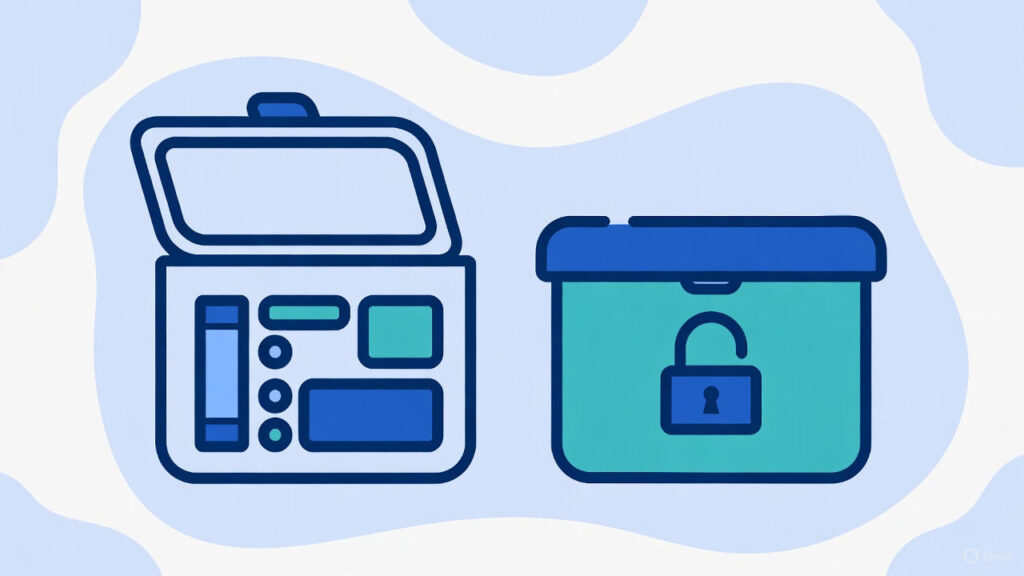
Open source AI means the model’s code and weights are publicly available for anyone to use, study, or modify. Closed source AI (also called proprietary AI) keeps these details private-you can use the service, but you can’t see how it works inside or run it yourself.
⚙️ How It Works
Think of recipes. Closed source AI is like a restaurant that serves amazing dishes but guards its recipes as secrets. You enjoy the food but can’t cook it at home, modify it, or see the ingredients.
Open source AI is like a community cookbook published for the world. You can make the dish yourself, tweak ingredients, share improvements, or even start your own restaurant using it.
For AI, “the recipe” means the model architecture and trained weights. GPT-4 is closed source-you access it through OpenAI’s API, but can’t download the model or see exactly how it works. Meta’s Llama is open source-you can download the entire model, run it on your own computers, and modify it however you want.
Think of it like Linux versus iOS: anyone can improve Linux, but only Apple controls iOS.
🌍 Real-World Example
A startup wants to build a customer service chatbot. With closed source AI (like GPT-4), they pay per API call, and customer conversations pass through the provider’s servers. They depend on the company’s pricing and policies.
With open source AI (like Llama), they download the model, run it on their own servers, and keep all data in-house. More technical responsibility, but no ongoing API fees and complete data privacy.
Researchers can audit open source models for bias and safety issues. With closed source models, they must trust the company’s reports-they can’t verify independently.
💡 Why It Matters
This divide shapes AI’s future. Closed source concentrates power in a few companies but offers polished products with strong support. Open source democratizes access and enables transparency, but raises safety questions-powerful AI in anyone’s hands.
The trend is moving toward hybrid approaches: “open weights” (the trained model shared publicly) but “closed training” (how it was trained stays secret).
Understanding the difference helps you evaluate AI tools and participate in conversations about how AI should be governed.
✅ Key Takeaway
Open source AI shares the complete recipe for anyone to use and modify. Closed source AI provides a service while keeping the technology secret-each with trade-offs in control, cost, privacy, and innovation.
[ainuggets_video url=’https://youtu.be/7Ag97AL6ZDE’ title=’Open Source vs Closed Source AI: What’s the Difference? | AI Nuggets’]
📚 Continue Learning
- What is LLaMA? – A key open source AI model
- What is an API? – How you access closed source AI
- What are AI Parameters? – The values kept hidden in closed models