
You’ve seen AI-generated images flooding social media and chatbots writing essays. Welcome to the age of generative AI—technology that creates rather than just analyzes.
🎯 The Simple Definition
Generative AI is artificial intelligence that creates new content—text, images, music, code, or video. Unlike traditional AI that classifies (“this is a dog”) or predicts outcomes, generative AI produces original outputs (“draw a dog in space”). When ChatGPT writes an email or DALL-E creates an image, that’s generative AI in action.
Think of it as a super-powered autocomplete: instead of just suggesting the next word, it can draft an entire article, paint a landscape, or compose a song.
⚙️ How It Works
Think of generative AI like a very attentive student who has read millions of books, seen millions of images, or heard millions of songs. It doesn’t memorize everything—instead, it learns patterns, styles, and structures.
When you ask it to create something, it doesn’t search a database and pull out a stored answer. It generates something entirely new by predicting what should come next based on everything it learned. For text, it predicts word by word. For images, it builds pixel by pixel. For audio, sound by sound.
[insight]The “generative” part means it’s producing new content that didn’t exist before—not just recognizing or sorting existing content.[/insight]
🌍 Real-World Example
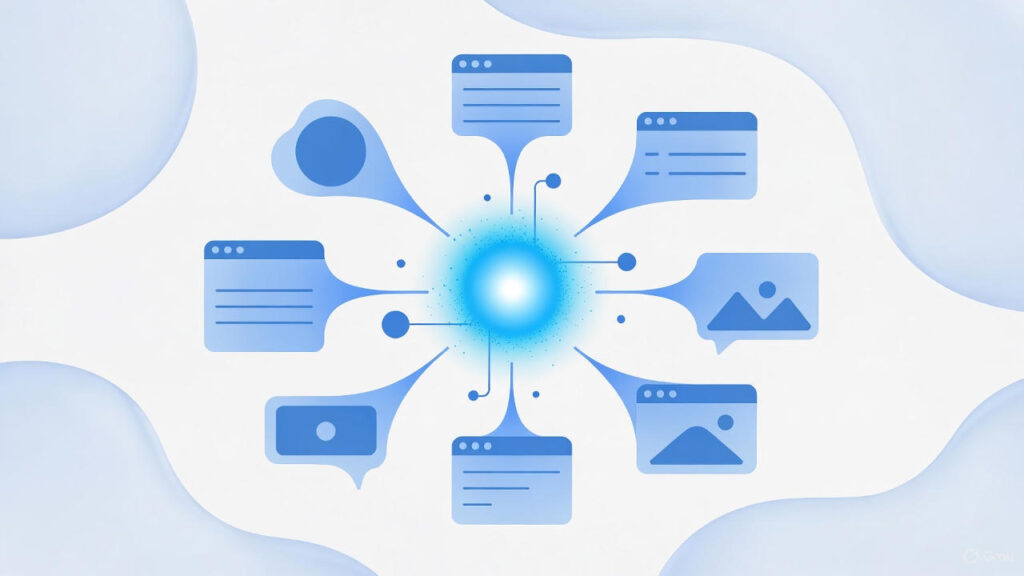
ChatGPT and Claude are generative AI for text—they write emails, explain concepts, and help with coding. Midjourney and DALL-E generate images from text descriptions. GitHub Copilot generates code suggestions as you type. Suno can generate a complete song in seconds from a simple prompt.
Beyond creative tools, companies use generative AI to draft marketing copy, create product mockups, and summarize documents. Researchers use it in drug discovery to imagine new molecular structures. Spotify uses it to create personalized playlists. The applications span far beyond art and writing.
💡 Why It Matters
Generative AI is changing how we work and create. Tasks that took hours—writing drafts, creating visuals, coding prototypes—can now happen in seconds. It’s democratizing creative tools, putting capabilities once reserved for professionals into everyone’s hands.
But it also raises important questions: Who owns AI-generated art? Can we trust AI-written content? How do we spot AI-generated misinformation?
Understanding generative AI helps you use these tools effectively, recognize their limitations (like making things up), and think critically about AI-generated content you encounter online.
✅ Key Takeaway
Generative AI creates new content—text, images, code, music—by learning patterns from existing examples. It’s the technology behind ChatGPT, DALL-E, and the current AI revolution.
[ainuggets_video url=’https://youtu.be/xPaoOMEp0JQ’ title=’What is Generative AI? A Simple Explanation | AI Nuggets’]
📚 Continue Learning
- What is a Large Language Model? — The engine behind text-based generative AI
- What is ChatGPT? — The tool that brought generative AI mainstream
- What are AI Hallucinations? — When generative AI makes things up